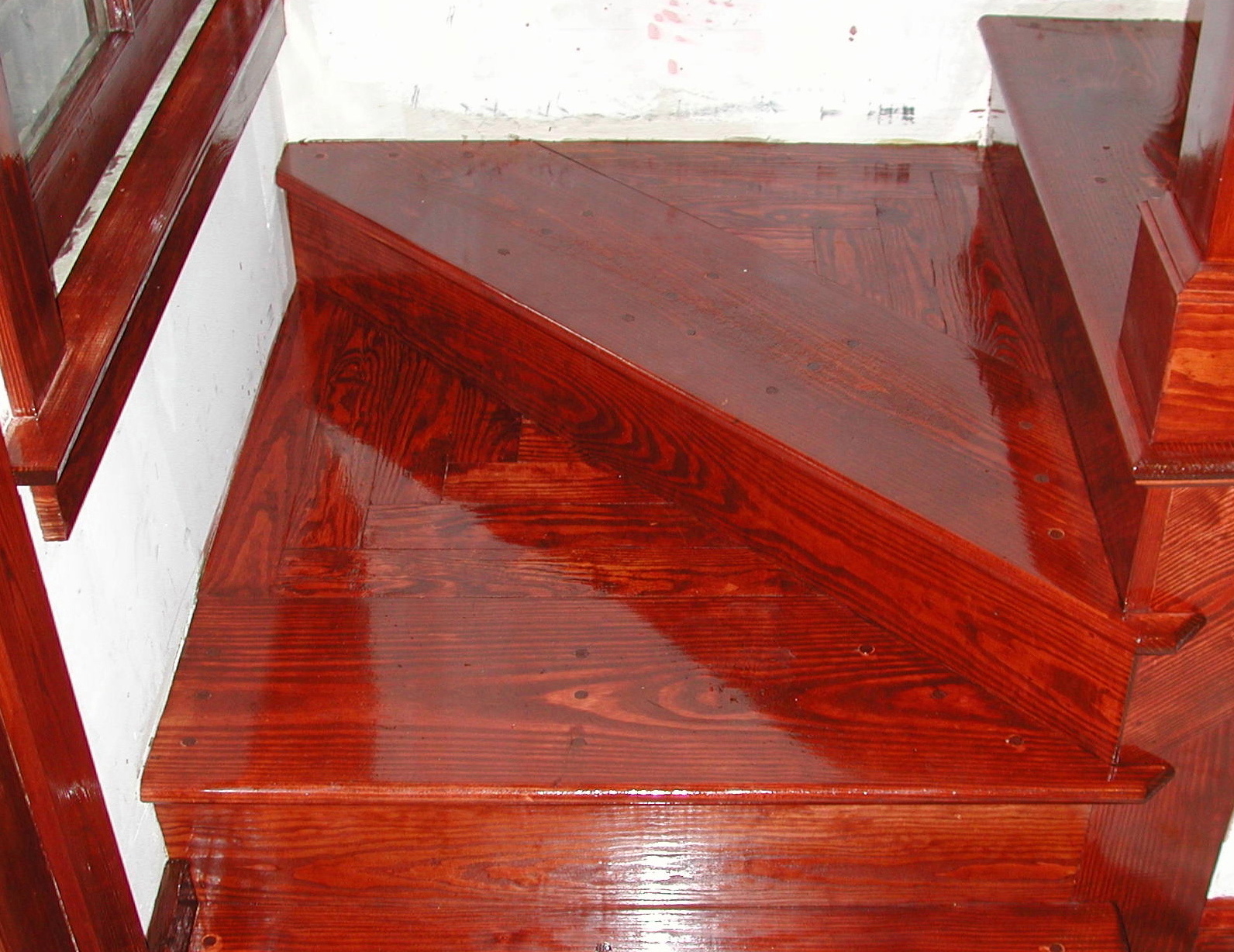
A common scenario at Ontario thrift markets: a dining table in reasonable condition sits alongside two chairs that almost match, one chair that clearly belongs to a different set, and a pair of side chairs that are structurally identical to the first two but noticeably lighter in tone. The buyer's goal — refinish everything to a consistent colour — sounds straightforward. In practice, it involves more variables than most finishing guides acknowledge.
Why the Same Stain Looks Different
Several factors cause stain to read differently on what appear to be identical or similar pieces:
Wood species variation
Many thrift-store dining sets — particularly those manufactured in Canada in the 1960s and 1970s — mix species without it being apparent from the exterior. A table frame might be soft maple, while chairs use birch for turned legs and poplar for flat apron panels. Maple absorbs most oil-based stains sparingly and reads lighter; poplar has unpredictable porosity and often blotches; birch falls between the two. The same Minwax Early American applied to all three in a single coat will produce three distinct tones.
Prior treatments and sealers
Pieces that were previously finished with shellac — common on pre-1970 Canadian furniture — may retain thin sealer residue even after stripping. This acts as a partial barrier to stain penetration and shifts the tone lighter and flatter. The effect is inconsistent across the piece, producing uneven colour in patches.
Sanding depth and grain direction
Sanding end grain (the top of a table leg, for example) opens the wood's pores in a direction that absorbs stain several times more deeply than face grain. A well-matched set will look consistent across flat panels but significantly darker on exposed end grain unless that is addressed intentionally.

Testing Before Committing
The only reliable method for predicting stain colour across mismatched pieces is testing on the actual wood, not on sample boards from a hardware store. Treat one sanded piece from the set as the reference. Apply the stain you intend to use — one coat, wiped off at the same interval — and topcoat a small section to see the final toned result. Use that as the target for the other pieces.
Stain colour shifts significantly under a clear topcoat. A swatch that looks close when dry may look noticeably different once polyurethane or oil is applied. Always compare swatches after topcoating, not before.
Gel Stains for Difficult Species
Gel stains — Minwax Gel Stain and General Finishes Gel Stain are the two brands most readily available in Canada — sit on the surface rather than penetrating into the wood. This makes them the most effective tool for evening out blotchy species. On poplar and pine — both prone to uneven absorption — a gel stain produces a more consistent result than a penetrating oil-based stain, and the colour is easier to control because wiping time is less critical.
The trade-off is that gel stains add surface build and can obscure fine grain detail on pieces with interesting figure. For maple and birch, a penetrating oil-based stain often reads more naturally, especially on pieces where the grain is part of the visual appeal.
Layering and Toning
When a single stain coat on one piece reads noticeably lighter than the target set by another, there are two approaches:
Second stain coat
A second coat of the same stain, applied before any sealer, deepens the colour. The effect is not perfectly additive — the second coat on an already partially-filled grain adds less depth than the first. Test the two-coat result on a hidden area before committing to the full surface.
Toning with finish
Adding a small amount of universal tint or oil-based stain concentrate to the first coat of clear finish (polyurethane or oil) creates a toned topcoat that adds colour gradually with each layer. This is the method used by professional furniture restorers to fine-tune colour after staining, and it allows very precise control. Minwax Polyshades combines stain and polyurethane in a single product and works on this principle — though it can be difficult to apply evenly over large surfaces without lap marks.
Matching Sheen Levels
Colour consistency is undermined if the topcoat sheen differs across pieces. Mixing a satin finish on one chair with a semi-gloss on the table creates a visible difference that the eye reads as a colour mismatch even when the stain colour is identical. Decide on a single sheen level before starting and apply it consistently. Satin (roughly 25–35 gloss units) is the most forgiving for dining furniture — it reads as natural without being flat, and minor sheen variations from the application technique are less apparent than on semi-gloss or gloss finishes.
Further Reference
- Minwax — stain selector and application guides for their product range, available at Canadian Tire and Home Depot Canada
- General Finishes — gel stain and water-based topcoat documentation, including technical FAQ on blotch-prone species
- Varathane Canada — Varathane stain and finish products available across Canadian hardware retailers